Communal Area Cleaning in South Kensington
If you are looking for dependable Communal area Cleaning in South Kensington, you are likely after more than a quick tidy-up. Shared spaces in apartment blocks, mansion flats, converted townhouses, managed developments, and mixed-use buildings need regular care to stay welcoming, hygienic, and presentable for residents, visitors, and property managers. In an area like South Kensington, where property standards are high and buildings often see heavy daily use, a well-planned cleaning service makes a real difference.
Communal areas are the first part of a building people notice. Stairwells, lobbies, hallways, lift interiors, handrails, bin stores, entrance mats, and shared landings all influence how a property feels. When these spaces are cleaned properly, residents enjoy a cleaner environment, visitors get a better first impression, and the building is easier to manage over time. For landlords, resident associations, block managers, and housing professionals, reliable communal cleaning also helps reduce complaints and keep shared areas in better condition.
Our local approach to communal area cleaning South Kensington focuses on routine, consistency, and attention to detail. We understand the needs of busy residential buildings near Gloucester Road, Earl’s Court, Knightsbridge, and the wider Kensington area, where access can be tight, parking can be challenging, and buildings may have a mix of old architectural features and modern usage. A good cleaning plan needs to fit the property, not the other way around.

Why communal area cleaning matters for South Kensington properties
South Kensington has a distinctive mix of homes and buildings. You will find elegant period conversions, mansion blocks, purpose-built flats, basement apartments, and managed residential developments, along with commercial premises that share entrances or internal access routes. These properties often have common spaces used every day, sometimes by dozens of residents and visitors. That means dust, footprints, litter, fingerprints, and general wear build up quickly if cleaning is inconsistent.
A shared entrance or staircase is more than a passageway. It is part of how the property is experienced by the people who live and work there. Clean communal areas help support a more respectful environment, reduce the spread of dirt through the building, and make it easier to spot maintenance issues early. A neglected landing can conceal spills, damage, odours, or pest-related problems until they become more expensive to address.
For block managers and resident committees, regular communal area cleaning South Kensington is also about protecting standards and reducing friction between occupants. When bin areas are cleared, floors are swept, touchpoints are sanitised, and stair rails are wiped down, there are fewer reasons for complaints and less pressure on residents to take on shared responsibilities themselves.
Common spaces that usually need attention
Every building is different, but many South Kensington properties benefit from regular cleaning of the following shared spaces:
- Entrance halls and reception areas
- Staircases and landings
- Lift interiors and lift doors
- Shared corridors and passageways
- Door handles, switches, and handrails
- Bin stores and refuse collection points
- Communal noticeboards and mail areas
- Shared windows, skirting boards, and ledges
- External entrance steps and immediate thresholds where appropriate
These are the places that gather dust, mud, moisture, and everyday marks. A regular schedule keeps them looking cared for rather than temporarily improved.

What our communal area cleaning service can include
Our service is designed to be practical for real buildings and real routines. Some properties need a simple weekly clean; others need several visits each week because of traffic levels, resident numbers, or shared commercial access. We can tailor the cleaning specification to suit the building’s needs, the management plan, and the expected footfall.
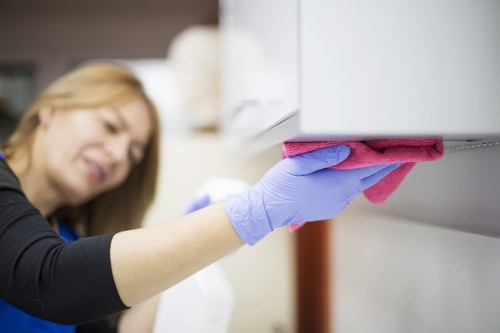
Typical tasks in a communal cleaning visit can include sweeping, vacuuming, damp mopping, dust removal, surface wiping, sanitising of contact points, spot cleaning, litter removal, and presentation-focused tidying. We can also support higher-traffic areas that need extra care, such as entrance floors that show shoe marks quickly or corridors that collect dust from older ventilation or high occupancy.
If your property has a lift, polished surfaces, or decorative finishes, the cleaning approach should be careful as well as effective. Historic buildings in South Kensington often include details that need a gentler touch than a standard office clean. We take that into account so that the cleaning supports the building’s appearance rather than risking damage to delicate features.
Examples of tasks included in a tailored cleaning plan
- Vacuuming carpets, rugs, and runners in shared areas
- Mopping hard floors with suitable products
- Removing visible dust from accessible ledges and skirting boards
- Cleaning glass at entrance doors and internal glazed panels
- Wiping handrails, intercom panels, push plates, and switches
- Emptying communal bins where required and agreed
- Refreshing bin stores to help control odours and mess
- Cleaning lift cabins, buttons, and door surrounds
- Spot-cleaning marks on walls, doors, and high-touch surfaces
Every property is assessed on its own needs. That allows the cleaning specification to reflect the building’s layout, materials, and daily use instead of relying on a one-size-fits-all routine.
Why choose a local South Kensington cleaning team?
Choosing a local provider brings practical advantages that matter in an area like South Kensington. Access can be limited, loading space may be tight, and some buildings are located on busy streets where timing and coordination make a big difference. A local team is more likely to understand those challenges and work around them efficiently.
South Kensington properties also vary widely. One building may have a grand entrance and wide staircases; another may be a compact conversion with narrow internal corridors and multiple levels. A local service is better placed to adapt to these differences and clean in a way that suits the property, rather than forcing a standard process into an unsuitable setting.
For managing agents and landlords, local availability can help keep routines steady. If a regular visit needs to be adjusted because of maintenance work, a move-in, or a tenant change, it is much easier to work with a nearby team that knows the building and can respond appropriately. That consistency is one of the key reasons people look for communal area cleaning in South Kensington rather than a distant provider.
Local knowledge helps with practical issues such as:
- Restricted parking and loading around busy residential streets
- Timed access arrangements for apartment blocks and managed buildings
- Shared entrances with intercom or key/fob entry
- Narrow staircases and older internal layouts
- Higher expectations for presentation in premium residential areas
- Coordination with concierges, caretakers, and building managers
Good communal cleaning is not just about making things look tidy. It is about understanding how the building works and cleaning in a way that fits daily life.
Who uses communal area cleaning services?
Communal area cleaning is useful for a wide range of customers. In South Kensington, the most common enquiries come from block managers, landlords, resident associations, freeholders, and property management companies. However, it is also relevant for commercial premises with shared access, mixed-use buildings, and smaller residential developments that need a dependable cleaning routine.
Many customers come to communal cleaning because they want to reduce day-to-day pressure on residents and improve the appearance of shared areas. In buildings where everyone is busy, it is rarely realistic to expect occupants to handle a proper standard of cleaning themselves. A structured service makes the responsibility clear and ensures the work is done properly.
Commercial customers also benefit. Offices with shared entrances, consultancy premises in converted buildings, and retail or hospitality spaces with internal common areas all need a tidy and hygienic environment. First impressions matter, and cluttered or dusty shared areas can undermine the professionalism of an otherwise well-run property.
Typical customers include:
- Landlords managing one or multiple flats
- Residential block and estate managers
- Resident-owned buildings and associations
- Commercial tenants with shared access areas
- Mixed-use property operators
- Letting and property management professionals
How we adapt to different property types
In a Victorian conversion, the focus may be on careful stair and banister cleaning, dust control, and preserving decorative surfaces. In a modern apartment block, the priority might be lift interiors, lobbies, glass, and entrance flooring. In a mixed-use building, shared access points may require more frequent attention to keep the residential and commercial sides presentable and orderly.
How the service works
We keep the process straightforward so that it is easy for property managers and residents to organise. The first step is usually a discussion about the building, the areas that need attention, and how often cleaning should take place. Once those details are clear, the cleaning plan can be shaped around the property’s layout and usage.
After that, the service is scheduled at agreed times. For many communal buildings, early morning, daytime, or off-peak visits work best, especially when shared access is involved. The aim is to clean efficiently while causing minimal disruption to residents, visitors, and building operations.
Regular visits are then carried out according to the agreed specification. This might involve weekly, twice-weekly, or more frequent cleaning depending on occupancy and wear. The emphasis is always on consistency, because communal spaces stay presentable when they are maintained regularly rather than cleaned only after they become visibly dirty.
Step-by-step overview
- Review the building layout and shared spaces
- Agree on the cleaning tasks and visit frequency
- Set practical access arrangements and entry instructions
- Carry out cleaning to the agreed standard
- Adjust the plan if the building’s needs change over time
When a service is clear and well organised, residents notice the difference quickly.

Areas and features we commonly cover in South Kensington
South Kensington is known for elegant streets, impressive period buildings, and a dense mix of residential and commercial properties. That creates a wide range of cleaning requirements. Some buildings have simple shared corridors, while others include multiple entrances, basement access, lift cores, or internal courtyards that need attention.
We commonly work across South Kensington and nearby areas such as Kensington, Knightsbridge, Chelsea, Earl’s Court, Gloucester Road, and the surrounding streets and residential pockets. The exact cleaning needs vary from one building to another, but the practical focus remains the same: keeping shared spaces hygienic, tidy, and fit for regular use.
In some properties, external thresholds and immediate entrance zones are as important as the internal areas. Mud and rainwater can be tracked in quickly, especially during wetter months, so entrance cleaning helps prevent grime from spreading further into the building. In others, the bin store or refuse area may be the main concern because odours, litter, or spills can affect the whole property if not dealt with regularly.
Common challenges in local buildings
- Older staircases and narrow access routes
- High footfall in shared entrances
- Dust build-up in ornamental or less accessible corners
- Marked walls and handrails from repeated use
- Lift button and door panel hygiene
- Refuse area cleanliness and odour control
- Pressure from residents expecting a smart presentation
Why regular maintenance helps
When these areas are cleaned consistently, the building stays easier to manage. Dirt does not build up as quickly, surfaces last longer, and issues such as bad smells or visible staining are less likely to take hold. That makes regular communal area cleaning a sensible choice for both appearance and long-term upkeep.
What to expect from a professional standard
Professional communal cleaning should feel organised, careful, and dependable. It is not only about removing dirt. It is also about how the service is delivered: arriving at the right time, following the agreed scope, and paying attention to the areas people notice most. In a residential building, that often means touchpoints, flooring, entrance presentation, and the cleanliness of shared circulation spaces.
A good standard also means being mindful of the property itself. Floors may be marble, tile, wood, laminate, or carpet. Each surface needs a suitable approach. Harsh or inappropriate methods can cause wear, while the right products and techniques can preserve the building’s condition over time.
For customers comparing options, it is worth looking for a service that values communication, reliability, and flexibility. Buildings change. Tenancies change. Seasonal weather changes how dirt enters the property. A cleaning plan should be able to adapt without becoming complicated for the customer.
Signs of a well-run communal cleaning service
- The building looks consistently tidy between visits
- High-touch points are cleaned properly
- The cleaning schedule suits resident and visitor flow
- Tasks are matched to the building’s actual needs
- Requests or changes can be handled without hassle
Reliable service is often noticed most when nothing goes wrong and the building simply stays in good condition.
Preparation checklist for residents and managers
Preparing for communal cleaning does not need to be difficult, but a few simple steps can help the visit go smoothly and make the work more effective. For managed blocks, clear access instructions are especially useful. For resident-managed buildings, advance notice about any unusual issues can prevent delays and help ensure the right areas are cleaned.
It is also helpful to keep shared spaces reasonably clear of personal items. Shoes, pushchairs, deliveries, and storage left in corridors can make cleaning harder and may affect access to edges and corners. Where possible, residents should avoid leaving items in common walkways, and managers should keep an eye on anything that blocks routine cleaning.
If there are maintenance works, decorators, or contractors in the building, it is sensible to inform the cleaning team in advance. That helps them avoid fresh materials, wet paint, or temporary obstructions and lets them focus on the areas that are still safe and appropriate to clean.
Useful preparation steps
- Ensure access arrangements are clear and up to date
- Remove personal belongings from communal walkways
- Let the team know about repairs, decorating, or building work
- Report any areas needing extra care, such as delicate flooring or fixtures
- Flag recurring problems like bin overspill or heavy traffic at certain times

Pricing factors for communal area cleaning
Customers often want to know what affects the cost of communal area cleaning, and the honest answer is that it depends on several practical factors. Because buildings differ so much, the most appropriate way to price the service is by looking at the property’s actual requirements rather than offering a generic figure that may not fit.
Important pricing factors can include the size of the building, the number of floors, the type of flooring, how often cleaning is needed, the amount of foot traffic, the presence of lifts or extra shared areas, and the level of detail required. Buildings with complex layouts or high usage naturally need more time and attention than smaller, quieter properties.
Access can also play a role. If the building requires specific timing, controlled entry, or coordination with management, the service may need to be planned more carefully. In South Kensington, where parking and access can be limited, the practical logistics are part of the service design and should be considered from the outset.
Factors that may influence a quote
- Building size and number of communal areas
- Cleaning frequency requested
- Flooring type and finish
- Whether lifts, bin stores, or external steps are included
- How much time access and setup require
- Any special requirements for delicate or high-value surfaces
Request a free quote if you want a cleaning plan that reflects the actual condition and usage of your building. That is the best way to get a fair and useful proposal.
Benefits of regular communal cleaning
Regular cleaning delivers more than a presentable appearance. It helps create a calmer, better-managed shared environment where residents and visitors can move through the building comfortably. This is especially valuable in properties with multiple occupiers, where shared standards need to be maintained by someone dependable.
There are also practical benefits. Dirt, spills, and rubbish are easier to manage when removed promptly. Touchpoints that are cleaned regularly are less likely to feel neglected. Floors and entrance areas are less likely to develop the kind of staining or build-up that becomes harder to tackle later.
For landlords and managers, a good cleaning routine can support retention, reduce complaints, and help maintain the appeal of the building. In an area such as South Kensington, where residents often expect a high standard, a tidy communal environment is not a luxury; it is part of normal building care.
Key advantages
- Better first impressions for residents and visitors
- Cleaner, more hygienic shared touchpoints
- Less build-up of dust, litter, and grime
- Improved day-to-day comfort in the building
- Support for property presentation and upkeep
- Reduced pressure on residents to manage shared cleaning themselves
Consistent care is usually more effective, and less disruptive, than occasional intensive cleaning.
FAQs about communal area cleaning in South Kensington
How often should communal areas be cleaned?
That depends on the building’s size, occupancy, and foot traffic. A quieter block may only need weekly cleaning, while a busier property with multiple residents and shared entry points may benefit from more frequent visits. The right schedule should match how the building is actually used.
Can cleaning be arranged for older period properties?
Yes. Many South Kensington properties have traditional features, narrow stairs, decorative finishes, or older flooring. These spaces can be cleaned effectively when the approach is chosen carefully and the work is done with attention to the materials involved.
Do you clean bin stores and refuse areas?
These areas are often included where agreed, because they can quickly affect the cleanliness and odour levels of the whole building. Bin stores usually need a different cleaning approach from entrance halls or staircases, so it helps to discuss them at the quotation stage.
Can the service work around resident access or key systems?
Yes. Many communal buildings use fobs, keys, intercoms, or concierge access. A local team can work with those arrangements as long as they are clearly set out in advance. That helps avoid delays and keeps the cleaning routine efficient.
What if our building has both residential and commercial spaces?
Mixed-use properties are common in and around South Kensington. In those cases, the communal cleaning plan can be adapted so that shared entrances, internal walkways, and other relevant areas are maintained without interfering with the different users of the building.
Is a tailored cleaning plan better than a fixed list?
Usually, yes. A tailored plan is more useful because it reflects the building’s layout, surfaces, usage, and access conditions. That means you only agree to the tasks that actually matter for your property, which makes the service more efficient and relevant.
Why customers choose a tailored local service
When people enquire about Communal area Cleaning in South Kensington, they are usually looking for a service that fits the building, communicates clearly, and keeps shared areas looking cared for without creating unnecessary disruption. They want a provider that understands the difference between a compact conversion, a formal apartment block, and a mixed-use building with more complex access.
A tailored local service is useful because it can respond to the realities of the area. South Kensington buildings often need a balance of presentation and practicality, especially where residents, visitors, and building managers all expect things to run smoothly. A good cleaning plan is one that supports those expectations day after day.
If you are responsible for a building in the area and want a service that feels straightforward to arrange, the next step is simple: contact us today, request a free quote, or book your service now. A well-managed communal cleaning plan can make shared spaces easier to maintain and more pleasant for everyone who uses them.
Areas covered
We provide communal cleaning for South Kensington and nearby locations, including surrounding residential streets, mansion blocks, apartment developments, and mixed-use buildings in adjacent parts of Kensington, Knightsbridge, Chelsea, Earl’s Court, and the wider local area. If your property is close by and has shared internal or external common spaces, a tailored cleaning arrangement may be available.
Whether you manage a single building or multiple properties, the goal is the same: keep communal areas clean, presentable, and practical for everyday use. Book your service now if you are ready to improve the condition of your shared spaces and make building management easier.